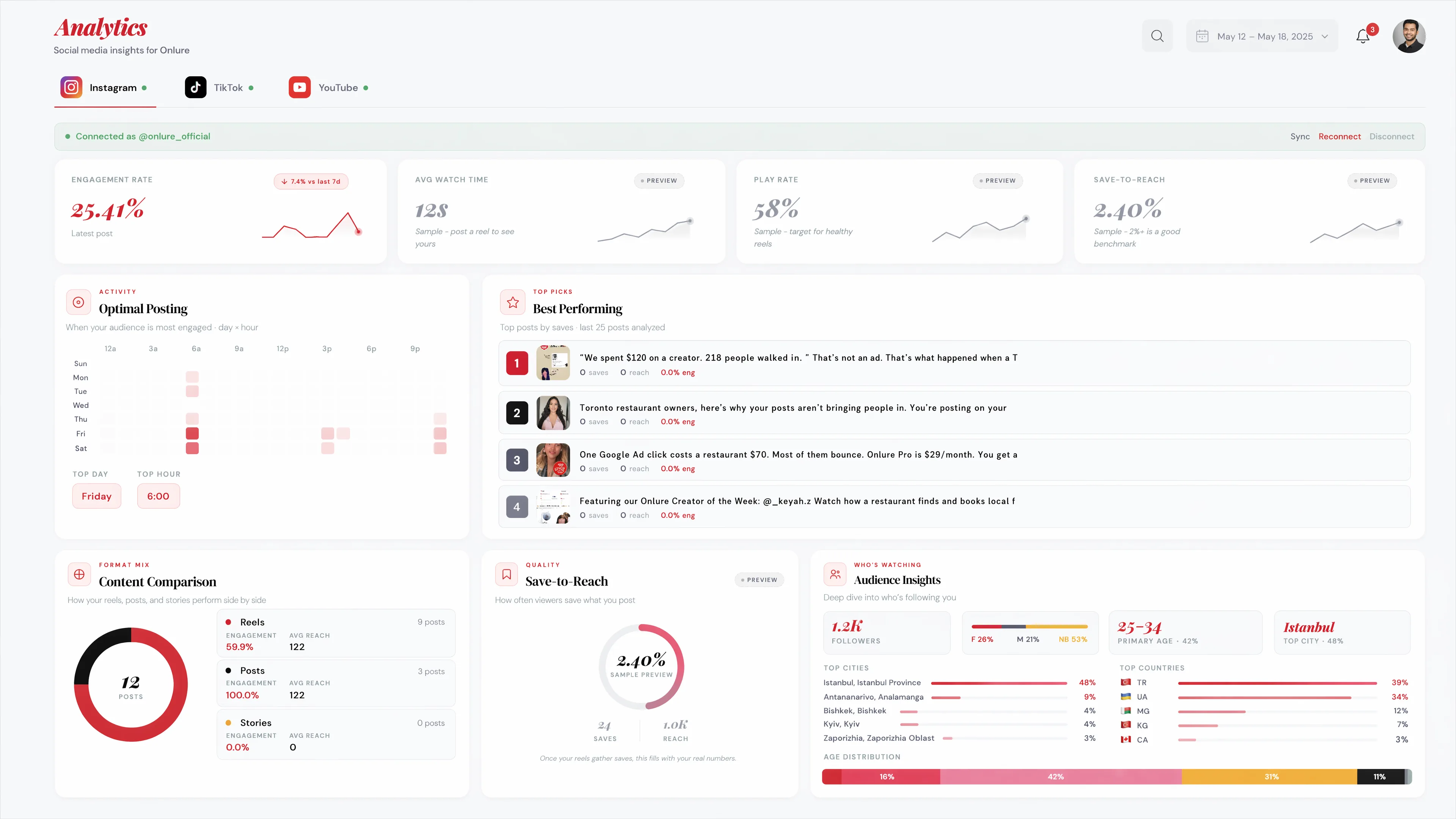

Before you pay for another creator post, check whether the last one sent people through the door and what those customers bought. Your report should make it clear whether you could afford to repeat the campaign at the same cost.
Start with the outcome you booked. For a local shop, a busy comments section can be encouraging while the counter stays quiet; you need both parts of the picture before spending again.
In short
- Compare creators against the same goal and measurement window.
- Keep content exposure, tracked visits and purchases in separate columns.
- Include the full campaign cost when calculating cost per visit.
- Treat small counts and missing records as uncertainty, then test again where useful.
Why is offline attribution so hard to solve?
A customer watches a creator's post, talks about it with someone else and visits several days later. Your till records a purchase, and the platform records a view, but neither record on its own identifies the post that prompted the trip. With several creators promoting the same place, that missing connection can leave you rebooking on guesswork.
Onlure has solved offline attribution so you can see the walk-ins a campaign sends and which source gets the credit. The published results are concrete: World Soccer Party counted 173 walk-ins from seven creators promoting its watch parties and ticketed yacht event; Simi African Foods counted 37 from its creators and flyers.
That evidence gives the rebooking discussion a starting point. You can assess the visits alongside costs and purchases instead of asking a view count to answer every business question.
What did you book the creators to achieve?
Start with the original brief. Was the job to create videos for your own channels, attract weekday visitors, sell event tickets or introduce a new service? A campaign can succeed at one of those and disappoint at another.
Write the main goal at the top of the report. Under it, list each creator's deliverable, publication date and agreed reporting period. If one creator posted during a holiday weekend and another posted after the offer ended, their results are not a fair ranking of ability.
For the next campaign, make the comparison possible before the work begins. The brief guide helps define the invitation and deliverables. The weekday campaign plan shows how a narrow time window makes a local test easier to review.
Which numbers belong in separate columns?
Keep three kinds of evidence apart. Content metrics describe exposure and response on the platform. Visit records describe arrivals credited under your measurement rules. Purchase records describe what people bought.
A save suggests someone may return to the post, while a counted walk-in tells you they arrived. Keep purchases in their own column, because someone can browse and leave, or pay for a group in one transaction.
Google Business Profile performance defines direction requests and call-button clicks as profile actions. Keep them as supporting signals rather than adding them to counted visits. They also can't tell you which creator deserves credit.
For linked traffic, Google Analytics campaign parameters identify referral campaigns in web reporting. Use consistent labels so the report remains readable. A tagged click tells you about a website visit; it doesn't by itself establish an in-store arrival or purchase.
How do you compare cost per visit fairly?
Add creator fees, platform costs allocated to the campaign, paid promotion, the direct cost of offers and any extra labour caused by the campaign. Use the same cost definition for each creator, and explain how shared costs were split.
Here is an illustrative comparison. Creator A's allocated campaign cost is C$240 and the store records 24 visits credited to that source. Creator B's cost is C$180 with nine credited visits. A's measured cost per visit is C$10; B's is C$20. These are invented examples for arithmetic, not results from an Onlure campaign.
Don't stop at that comparison. If A's visitors mostly browsed while B's bought higher-value items, the purchase evidence could change your decision. Use the cost-per-visit explainer for the formula, then assess the business outcome separately.
The content may also have value beyond the original post. Record whether the agreed usage rights let you use it again and whether it answers a customer question well. Don't assign an invented cash value merely to make the campaign look profitable.
Does a tracked visit prove an extra customer?
It establishes a connection under the method you used. It doesn't automatically establish that the person is new, that they bought something or that they would have stayed away without the campaign.
Describe attribution and additional business separately. A customer might follow two creators, see a shop's own post and then mention one source at the counter. Decide how overlapping evidence is handled, and count the physical visit once in the campaign total.
For a stronger follow-up, compare similar periods and keep the offer stable. Note other activity such as a local event or a separate sale. A carefully planned comparison can improve your judgment, but a simple before-and-after chart can't isolate every cause.
What do missing or tiny counts mean?
If staff forgot to record one creator's visits for two days, mark that gap visibly. A missing count isn't the same as zero. Ask whether the post included the agreed invitation and whether the offer remained available.
When a creator sends one or two recorded visitors, a single transaction can change the apparent ranking sharply. Treat that as limited evidence. Revisit audience fit, content clarity and timing before deciding that the creator can never work for your business.
Also review delivery: did the creator arrive as agreed, publish on time and correct factual mistakes? Keep disclosure in that quality check. The Competition Bureau's influencer guidance says promotional relationships should be disclosed clearly.
Write down the next decision and its reason: rebook, change the brief and test again, or pause. Share the relevant results with the creator so they can propose something better. On Onlure, use the attributed walk-ins as the starting evidence, then check costs and purchases before agreeing on the next budget.
Frequently asked questions
Should I rebook the creator with the most views?
Views help explain exposure, but the rebooking decision should follow the campaign goal. For a local visit campaign, compare counted visits, purchase evidence, full campaign costs and reliability, using the same measurement window for each creator.
Does a tracked visit prove the campaign brought a new customer?
No. A tracked visit connects an arrival to a recorded source under your measurement rules. It does not establish that the visitor is new or that they would have stayed away without the campaign. Report those questions separately.
What if the campaign produced too few visits to compare creators?
Treat the result as inconclusive. Check the offer, posting dates, tracking coverage and audience fit, then consider a smaller follow-up test. A single visit or a missing count is too little evidence for a confident ranking.