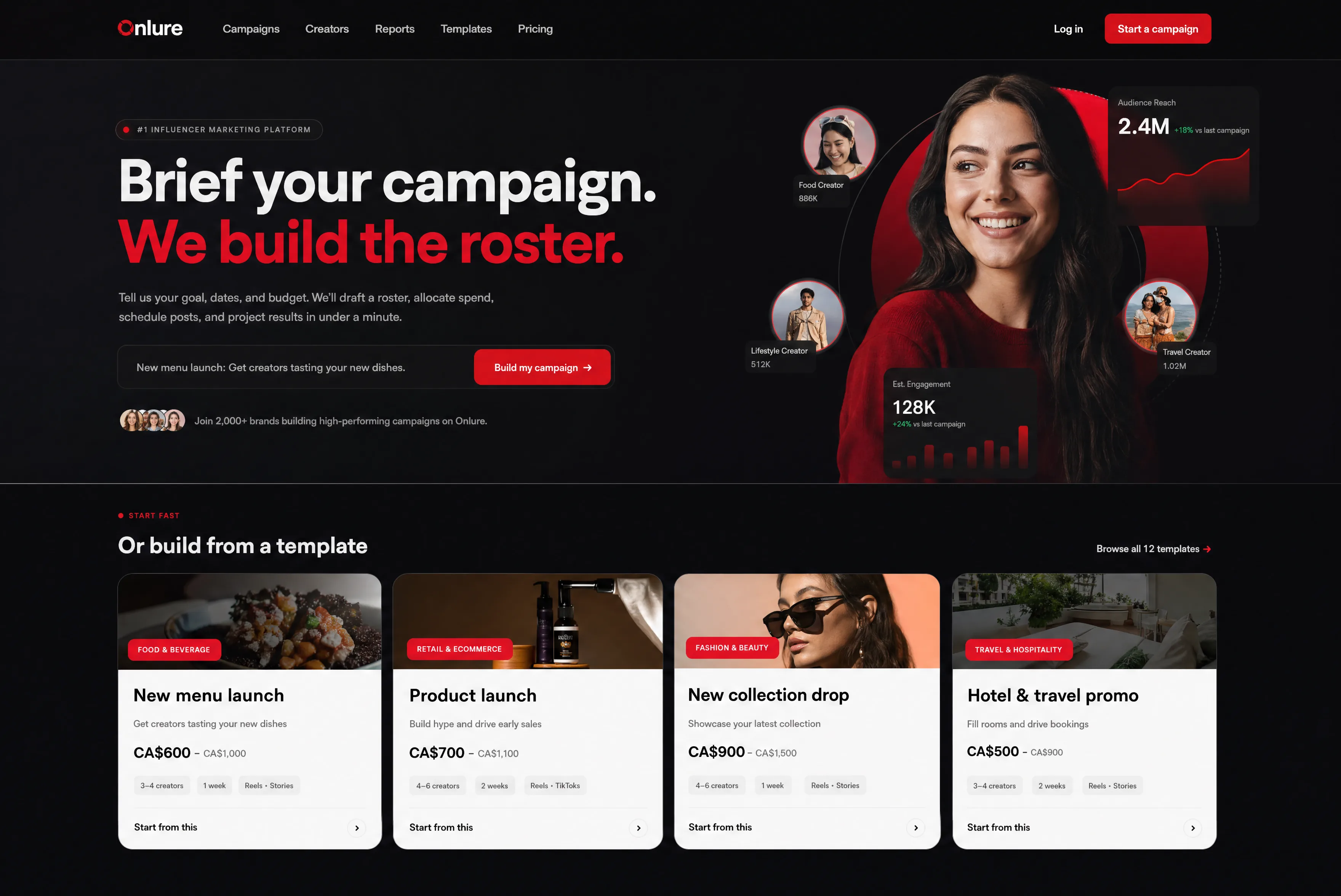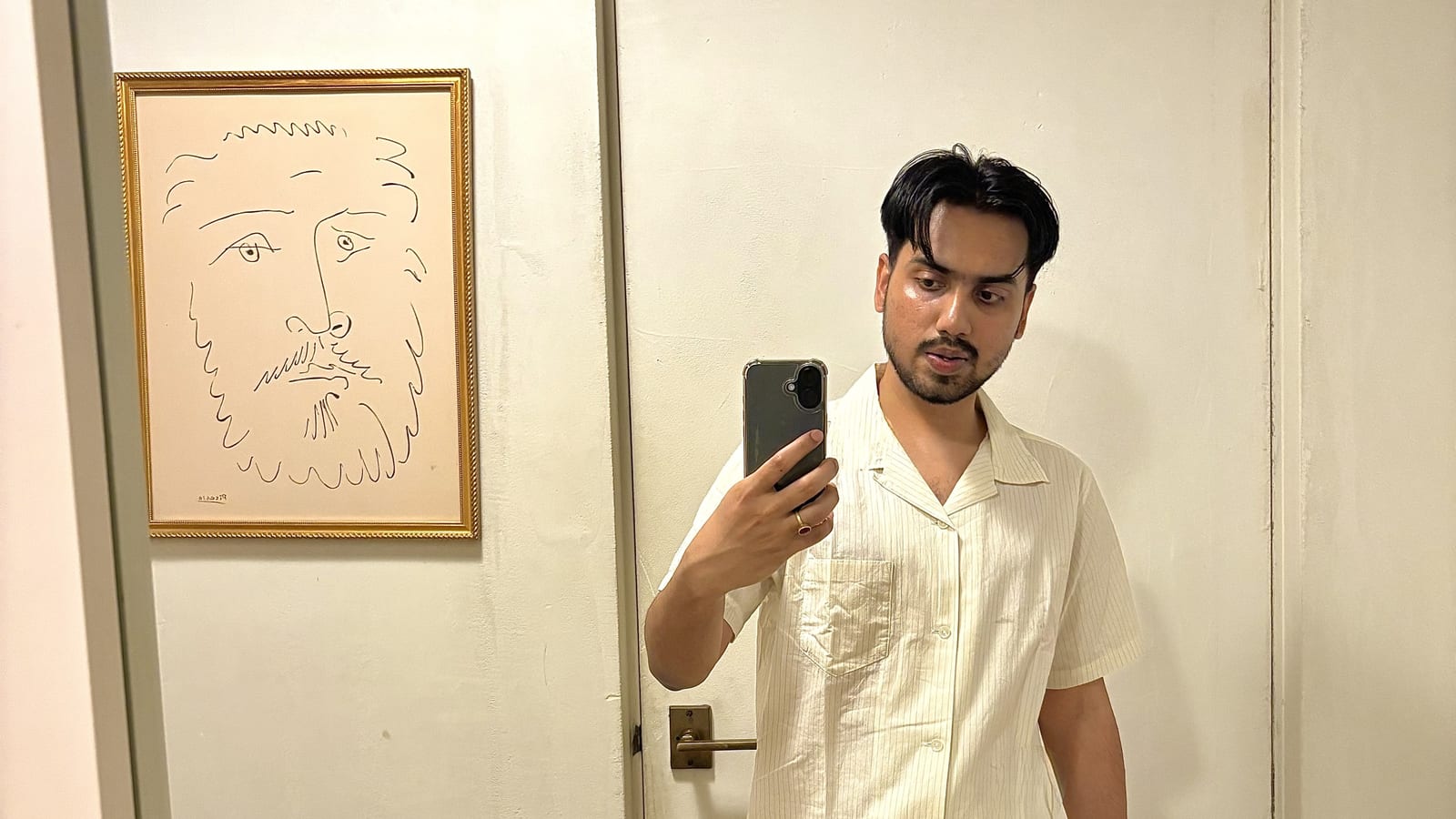

Most consumer tech founders in 2026 still default to San Francisco. I left Instagram in November 2025 and stayed in Toronto to build Onlure. This post is the case for why Toronto is the right place to build a creator marketplace serving North American local commerce, what San Francisco gets wrong about local marketing, and what working on Onlure looks like in week 24.
Six months ago I left a job in infrastructure engineering at Instagram to build Onlure. Most founders I trained alongside in tech's last decade made the same exit and immediately moved to San Francisco. I stayed in Toronto. People keep asking why.
This is the long version of the answer. It's not a knock on San Francisco. It's a case for Toronto, for the specific kind of company I'm building. It also gets at why I think the next decade of consumer software will look different from the last one, and why the assumption that every category-defining company has to be built in California has quietly stopped being true.
What I learned in 4 years at Meta
I joined Meta straight out of college, on the Instagram infrastructure team. I shipped automated TestFlight beta distribution for Instagram and Threads (the first version got adopted across Facebook, Messenger, and WhatsApp). I built Meta's first automated Google Play rollback system, after a P0 escalation that went straight to leadership.
Working at Meta taught me three things I use every day at Onlure.
One: scale changes the problem more than people realize. A feature that works for 10K users behaves differently at 10M, and differently again at 1B. The patterns I saw shipping infrastructure across Facebook, Instagram, WhatsApp, and Threads are the patterns I now use to design Onlure for the growth a creator marketplace will see.
Two: the creator economy is structurally underpriced. I sat next to people who knew exactly what creator marketing was driving for the largest brands in the world. The same dynamics are missing at the small business level, not because they don't work but because nobody has built the infrastructure for them. That gap is the entire opportunity for Onlure.
Three: real measurement is hard, and almost nobody solves it correctly. I watched how attribution actually works at platform scale. The shortcuts everyone takes. The places where the data lies. The handful of techniques that hold up. The way creator-marketing measurement should be built for local commerce comes straight out of what I saw inside a platform serving billions of users, with the right product choices for small businesses instead of the wrong ones.
Why Toronto, specifically
Five reasons I'm building from Toronto, in order.
Reason one: Toronto is a creator-dense city. An estimated 4% of Toronto adults earn at least some income from content creation. The food, fitness, beauty, and fashion verticals all sit in the global top quartile for engagement. And the neighborhoods (Queen West, Kensington, Liberty Village, Yorkville, Leslieville, the Annex) have their own creator scenes that already know each other.
If I'm building a creator marketplace, I want to build it where the creators are. San Francisco has technologists. Toronto has creators.
Reason two: small business density. Central Toronto packs in more independent restaurants, cafes, salons, fitness studios, and boutiques per square kilometer than almost anywhere in North America. Onlure's brand-side customer is everywhere here. I can walk down Queen West and count 30 potential brand customers in a 4-block stretch.
That matters. The product needs constant feedback from both sides of the marketplace, and walking outside to see the actual users isn't a luxury. It's a real edge.
Reason three: Canadian payments infrastructure. Interac e-Transfer is one of the best peer-to-peer payment rails in the world: fast, low-cost, everywhere. A creator marketplace that pays in CAD via Interac is a structurally better experience for Canadian creators than any US-built platform pushing PayPal or wire transfers.
The dual-rail setup Onlure runs (Stripe for cards, Interac for direct e-Transfer) only works because of where Canadian payments infrastructure sits in 2026.
Reason four: distance from the Bay Area echo chamber. A lot of consumer tech over the last 5 years got built for a fictional user who mostly looked like the founders. Toronto is far enough from that echo chamber to keep the local commerce thesis honest. The cafe owner in Riverdale won't pretend Onlure makes sense if it doesn't. The creator in the Junction will tell me to my face when something's annoying.
That kind of feedback is the most valuable input a startup gets, and it's harder to find inside the bubble.
Reason five: cost structure. Building a startup in Toronto in 2026 runs roughly 35% to 50% cheaper than building the same startup in San Francisco. The runway math compounds. A solo founder here with the same capital can build longer, ship more, and stay independent further into the company's life.
I'm not optimizing for cheap rent. I'm optimizing for the time to make Onlure right.
What working on Onlure looks like in week 24
Six months in. Week 24 of being a founder. The math:
- Days since I left Meta: ~180
- Hours per day on Onlure: 12 to 16
- Lines of code shipped solo: hundreds of thousands
- Cups of coffee consumed: too many
- People who think this is a real company: more than I expected
- People who think I'm crazy for trying: also more than I expected
The work splits roughly 60% engineering, 25% creator and brand outreach, 10% content and growth, and 5% operations and admin. I sleep less than I used to, and I'm more focused than I've ever been.
The platform is being used. Real Toronto creators are getting paid by real Toronto brands through Onlure every week. The first paid bookings happened in March, the cadence has held since, and the count of completed bookings climbs every week.
The hardest part is that building a two-sided marketplace solo is brutal. Focus on creators and you lose brand momentum. Focus on brands and creator activity dips. The dance never stops.
What I'm proudest of is that the platform feels like it was built by someone who actually cares about both sides. Most creator marketplaces feel built for brands, with creators bolted on after. Onlure was built for both, and the creator experience is treated as the primary one, because creators are who decides whether the platform survives.
What I would tell other founders thinking about Toronto
A few things I've learned that might be useful:
The Toronto tech community is real and growing. The MaRS Discovery District, the network of Toronto-based founders, the events, the meetups. It's here. Smaller than San Francisco's by an order of magnitude, sure, but the density climbs every quarter.
The capital is here, if you know where to look. Canadian VC has historically been concentrated and conservative. That's shifting. Funds in Toronto, Vancouver, and Montreal are actively writing checks to local founders. The flagship US firms are opening Toronto channels too. Pear, Greylock, a16z have all started looking actively.
The talent is here. Canada has trained engineers for decades. Graduates from Waterloo, UofT, and McGill are world-class, and most of them stay in Canada in 2026 because the opportunities here finally compete with the US for the first time in 20 years.
Work in public. True everywhere, more so in Toronto. A smaller community means a public profile compounds faster. Build in public, share what you learn, and the right people find you.
What's next
Onlure is into the second half of year one. The roadmap from here is clear:
- More Toronto creators on the platform
- More Toronto brands booking through the platform
- Expanding into the rest of the GTA
- Beyond Toronto (Vancouver, Montreal, Calgary) in the next 12 months
- Deepening the measurement layer that connects creator content to local foot traffic
I'm one founder. I've shipped what most teams of 5 to 10 ship in the same window, and I plan to keep doing that.
If you're a creator, claim a profile. If you're a brand, sign up. And if you're a founder reading this and weighing whether to build from Toronto, the answer is probably yes.
Get involved