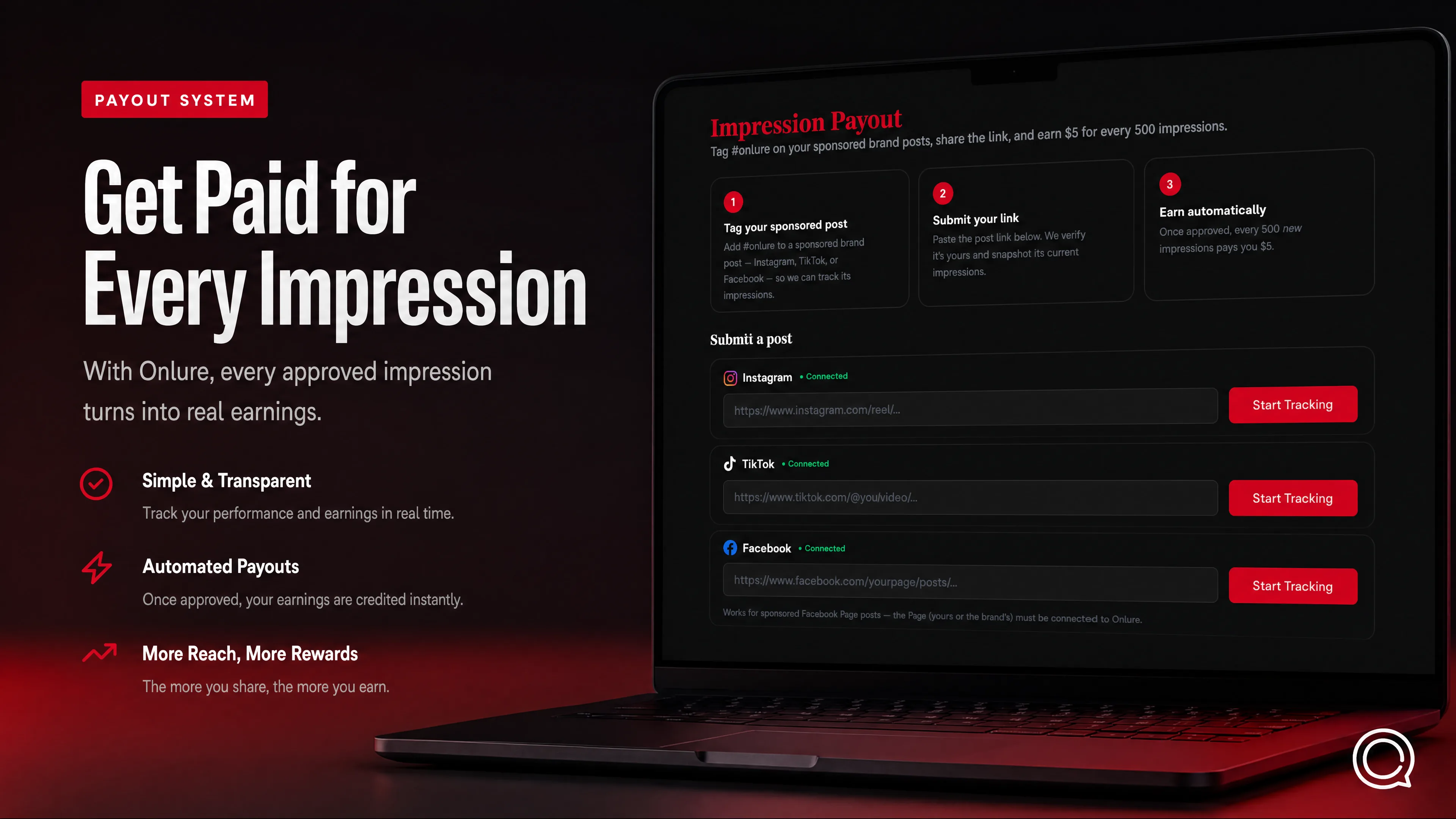

The flat-fee-only era is ending. In 2026, the most common way creators get paid is performance-based. Creators who understand the new structure earn more, not less.
What changed
Per the Influencer Marketing Hub 2026 benchmark (600+ marketers), performance-based compensation is now the most common model at 53%, ahead of product gifting (47%) and pay-per-deliverable (46%). Only 6% of brands don't compensate creators at all.
Meanwhile, average influencer CPM collapsed to $2.68 in 2025, a 42% year-over-year drop (Aspire). Brands paying purely for impressions are paying less. Brands paying for results are paying for results.
How to price without losing money
Performance pay only works in your favor if you structure it well.
- Always keep a floor. Negotiate a flat base that covers your time, then add the performance layer on top. Never work for "exposure" or a pure maybe.
- Stack flat + commission. A base fee plus a per-booking or per-visit bonus aligns you with the brand and rewards your best work.
- Charge usage separately. Content licensing is now its own line item. Creators commonly price usage at 25–150% of base rate, and perpetual rights can add 100–150% (GoViral Global, 2026). A like or repost transfers no commercial license. If a brand runs your content as a paid ad, that's a paid add-on.
Get paid safely
Tie payment to a platform that holds funds until delivery (escrow) and pays out cleanly. In Canada, Interac e-Transfer is the preferred rail. Onlure is commission-free for creators, so you keep 100% of your negotiated rate.
The takeaway
Performance pay isn't a pay cut. It gives you the upper hand, as long as you keep a floor, stack a bonus, and bill usage rights on their own. Price like the market already shifted, because it has.