A creator campaign produces views, and a café needs visits. The gap between the two is where most local creator budgets go missing: the business sees the reel, feels busier that weekend, and cannot say which of the three creators it paid actually sent anyone. Closing that gap takes a count with three properties, and none of them come from the ad platforms.
In short
- 88% of Canadian diners at least occasionally rely on a restaurant's popularity on social media before deciding to go (Harris Poll for TouchBistro), and 38% of Canadians got news from a creator in the past week (Digital News Report Canada 2026).
- A creator count needs a source per creator, a visit counted at the counter, and a window.
- Platform estimates cannot do it: Google's store visits are modelled for the population, and Meta has no store traffic objective.
- Two Toronto campaigns counted 173 and 37 walk-ins creator by creator.
Why do creator campaigns need their own attribution?
Because the thing a creator produces is persuasion, not a click. The Harris Poll for TouchBistro found 88% of Canadian diners lean on a restaurant's social media popularity when choosing, and 35% had used Google Reviews in the past three months to pick a place. Leger's 2026 DGTL study found 79% of Canadians who follow creators prefer personal or spontaneous content to brand partnership content. People are moved by a person they recognize, and then they walk in days later without touching a link.
A link-based count misses them. A platform estimate cannot name the creator. So the business ends up paying three creators the same fee and rebooking by instinct, which is how good creators get dropped and bad ones get renewed.
What does a creator count need?
- A source per creator. Each creator gets something only their followers have: their own code, their own link, their own offer. One shared code tells you the campaign worked and nothing about who.
- A visit counted at the counter. The code shown, the offer claimed, the visit recorded on site. Not a view, not a click, not a modelled guess.
- A window. Credit a visit to a creator for a fixed period after the post. Beyond it the visit is the café's own.
That is offline attribution applied to one channel, and it is what makes cost per visit possible per creator rather than per campaign.
What does not work
Asking the platforms. Google Ads models store visits from signed-in users with location history and reports them "extrapolated to represent the broader population", for accounts that pass privacy thresholds, and only for Google's own ads, never for a creator's post. Meta reduced its objectives to six and retired store traffic. Neither will ever tell you that the Thursday regulars came from the creator who filmed the croissant.
One code for everyone. It proves the campaign and loses the creator.
Asking the customer. "Did you see the video?" produces polite yeses and forgotten noes. Use it to check the count, not to make it.
Judging by views. A creator with 40,000 views and no visits cost you a fee. A creator with 3,000 views and 30 visits is the one to rebook. Views are the creator's number; visits are yours.
What works
Give each creator their own source, count at the door, and pay a bonus on the count. World Soccer Party booked seven creators on C$1,000, passed 30,000 views and counted 173 walk-ins, each matched to the creator who sent it, so the promoter knew which three to book again. Simi African Foods ran two creators and a stack of flyers on C$500, counted 37 walk-ins, and could see the creators' visits and the flyers' visits side by side.
Brief for the visit, not the view. The shot list asks creators for the price, the door and the neighbourhood, the three shots that turn a viewer into a visitor. And keep disclosure clean: Ad Standards' guidelines require #ad for paid work and #Gifted for gifted, placed where it can be seen.
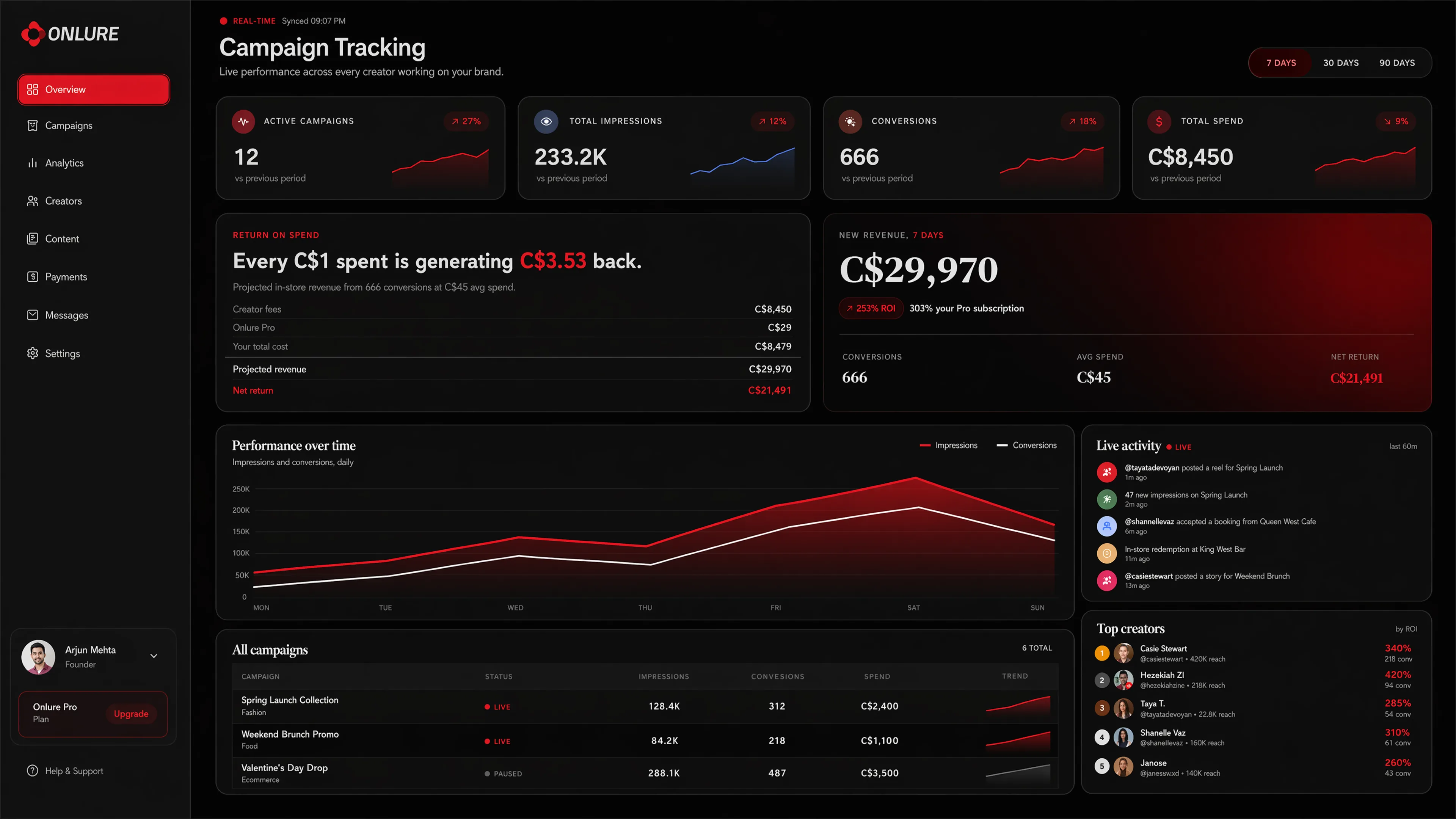
On Onlure, local businesses book local creators for a campaign and see the walk-ins each creator sends, which is the count described above with the bookkeeping done. The brands page explains how a campaign is set up.
Frequently asked questions
How do I track which influencer brought customers to my store?
Give each creator a source only their followers have, such as their own code or offer, count it at the counter, and credit visits inside a set window after the post. Platform store visit estimates cover only the platform's own ads, never a creator's post, so the count has to be yours.
Should each creator get a different promo code?
Yes. A shared code proves the campaign worked but not who sent whom, which means the next budget cannot follow the results. A code per creator costs nothing extra and makes the rebook decision obvious.
What is a good number of walk-ins from a creator campaign?
It depends on the offer and the neighbourhood. Two published Toronto campaigns counted 37 walk-ins on a C$500 budget and 173 on C$1,000. Judge each creator on visits per dollar, not on views.