These are the numbers a Canadian café, salon or shop asks for before booking a creator: how people choose where to go, how much they trust creators, what platforms take, what gifting returns, and what the margins allow. Each links to its source, checked on October 6, 2026. Where a source is American or British, the entry says so.
In short
- 88% of Canadian diners at least occasionally check a restaurant's social media popularity before going.
- 79% of Canadians who follow creators prefer personal content to brand partnerships, and 67% trust an AI influencer's recommendation less than a human's.
- Marketplace fees range from 0% to 20% of a creator's payment, depending on the platform.
- 44% of Canadian restaurants were at a loss or breaking even, which is why the count of visits matters more than the count of views.
How Canadians choose a place
1. 88% of Canadian diners at least occasionally rely on a restaurant's popularity on social media before deciding to go, and 35% used Google Reviews in the past three months to choose (Harris Poll for TouchBistro, 1,000 diners). 2. 86% of Canadians planned to shop close to home over the 2025 holidays, and 84% to look for Canadian-made products (Retail Council of Canada, 2,505 adults, October 2025). 3. 59% planned to browse in store for inspiration, and 40% said they are more impulsive during the holidays (same survey). 4. 69% of 18 to 35 year olds in the United States and the United Kingdom rely on personal networks and word of mouth to find events, and 79% plan to attend more events in 2026 (Eventbrite).
How much Canadians trust creators
5. 79% of Canadians who follow creators prefer personal or spontaneous content to brand partnership content, and 66% prefer "people like me" over people who make them dream (Leger, 2026 DGTL study). 6. 67% of Canadians trust an AI influencer's recommendation less than a human's, 57% say knowing an influencer is AI makes them less likely to buy, and only 24% feel confident they can tell AI and human influencers apart (Caddle for Ad Standards, 2,242 Canadians, October 2025). 7. 38% of Canadians got news from creators or influencers in the past week, rising to 57% of 18 to 24 year olds and 55% of 25 to 34 year olds (Digital News Report Canada 2026, 2,059 Canadians). 8. Social media became the most-used news source in Canada for the first time in 2026, at 53%, up from 44% (same report). 9. Across 135 major news events from 2023 to 2025, influencers took 84% of the engagement on Instagram (Media Ecosystem Observatory, Summer 2026 brief, page 15).
What the platforms take
10. Collabstr adds a 10% hiring fee on its free plan (5% on Premium), and creators pay a separate 15% on their payout (Collabstr). 11. Insense charges a 20% marketplace fee on creator payments on its Trial and Brand plans, 7% on Agency (Insense). 12. Shopify Collabs applies a 2.9% processing fee to every automatic commission payment (Shopify Help). 13. Onlure charges zero commission on bookings, with Plus at C$29 a month (Onlure pricing). 14. Brand deals are about 70% of creator revenue worldwide, and only about 4% of the 50 million global creators earn more than $100,000 a year (Goldman Sachs Research).
What gifting returns
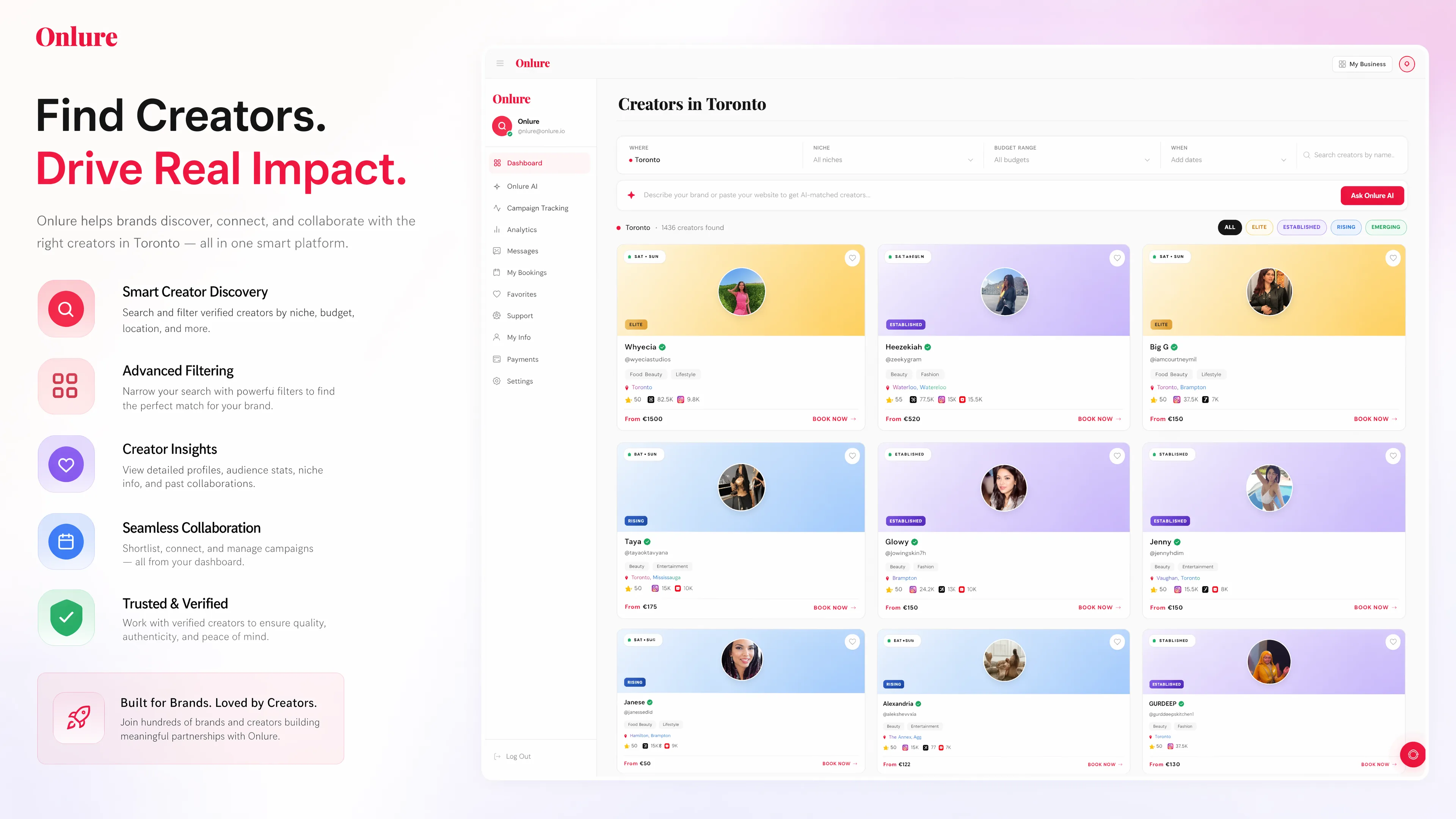
15. Fewer than 25% of gifted collaborations turn into a deeper relationship with the creator, and about one in five marketers put the figure under 10% (Modash, 74 marketers, May 2026). 16. Creators post 50% of the time under barter deals and 43.8% for no-strings gifts; 90.5% of marketers say creators ghost gifting campaigns more often than other collaborations (same survey). 17. The CRA treats free products and trips received for creator work as income at fair market value (Canada Revenue Agency). 18. Ad Standards counts "free products with or without any conditions attached" as a material connection that must be disclosed, with #Gifted the accepted tag (Ad Standards, Fall 2025).
What the margins allow
19. 44% of Canadian restaurants were operating at a loss or breaking even in Q4 2025, and 60% had worse profitability than expected (Restaurants Canada). 20. Real foodservice sales are forecast to fall 1.1% in 2026 (same release), and Dalhousie's Agri-Food Analytics Lab expects 1,500 to 2,500 net closures (Retail Insider). 21. Restaurant menu prices were 7.8% higher in February 2026 than a year earlier (Statistics Canada).
What can be measured
22. E-commerce was 6.8% of Canadian retail trade in May 2026 (Statistics Canada); the rest changed hands where web analytics cannot see. 23. Google Ads store visits are modelled, "extrapolated to represent the broader population", and need enough ad volume and foot traffic to pass privacy thresholds (Google Ads Help). 24. Meta consolidated 11 ad objectives into six and retired store traffic (Meta Business Help). 25. 35% of iOS users shown the tracking prompt allow it; in Canada, 29% (Adjust, Q2 2025).
How to use these numbers
The trust figures say a local creator is the voice Canadians say they want. The fee figures say where the budget goes before it reaches the creator. The margin and measurement figures say why the count of visits, not views, is the number to buy on. The offline attribution guide and the cost per visit explainer turn them into a plan. On Onlure, local businesses book local creators for a campaign and see the walk-ins each creator sends; the Simi African Foods case study carries one such count.
Frequently asked questions
Do Canadians trust influencers?
They trust people more than brands and humans more than AI. 79% of Canadians who follow creators prefer personal content to brand partnerships (Leger), and 67% trust an AI influencer's recommendation less than a human's (Caddle for Ad Standards).
What percentage of influencer fees do platforms take?
It ranges from 0% (Onlure) to 10% plus 15% from the creator (Collabstr's free plan) to 20% of creator payments (Insense's Trial and Brand plans), based on each vendor's pricing page on October 6, 2026.
Does influencer marketing drive store visits?
It can, but the platforms cannot show it: Google's store visit metric is modelled for large accounts and Meta retired its store traffic objective. Businesses that count visits per creator, as the two Toronto case studies did, can see it directly.