
TLDR: Follower count predicts almost none of what brands actually care about: foot traffic, conversions, and ROI. Onlure platform data across 200+ Toronto bookings shows the top-converting creator last quarter had 2,300 followers. The 200,000-follower creator on the same campaign drove fewer in-store visits. What predicts performance is engagement quality, niche fit, and locality. What follower count predicts is ego. Here's the data.
Every creator pricing conversation in 2026 still opens the same way: "How many followers do you have?" Wrong question. The data has been screaming that for years. Here's why follower count is the worst single metric for pricing a creator, and what should replace it.
1. Does follower count actually predict campaign success?
No. Across 200+ Toronto creator bookings on Onlure in the last 6 months, follower count correlates with verified in-store visits at roughly 0.18. That's barely above random.
Here are the metrics that actually correlate:
- Engagement rate (saves + shares): 0.61 correlation
- Niche match score: 0.54
- Distance from brand location: -0.49 (closer is better)
- Past campaign completion rate: 0.58
- Profile completeness on platform: 0.41
In plain language: a creator's engagement quality, their fit with the brand's niche, how close they live to the business, whether they've finished past campaigns, and how thoroughly they've filled out their profile each predict performance better than follower count does.
2. Why do nano creators outperform 50K creators for local brands?
Three reasons, all structural.
Reason one: nano followers are a real community. A creator with 3,000 followers in Toronto knows a meaningful chunk of them by name or username. Their recommendation lands like a friend's. A creator with 50,000 followers has a passive audience, and their recommendation lands like an ad.
Reason two: nano content is geographically concentrated. A 3,000-follower Toronto creator typically has 70% to 85% of their followers in the GTA. A 50,000-follower creator might have 20% to 35% in the GTA, with the rest scattered nationally and internationally. For a local brand, that concentration decides everything.
Reason three: nano creators have higher engagement scarcity. A 3,000-follower creator posts maybe 1 to 3 sponsored posts a month. A 50,000-follower creator drops a sponsored Reel as 1 of 8 to 12 that month, and their followers' tolerance for promo is already shot. The same dollar buys you less attention.
3. What metrics actually matter when pricing a creator?
The pricing inputs that work in 2026:
- Local follower density (what % of followers are in your target city)
- Engagement rate on saves and shares (not likes, which are gameable)
- Niche specificity (how clearly the creator owns one vertical)
- Past campaign completion rate (have they delivered before)
- Verified visit conversion rate (how many bookings actually drove store visits)
- Audience demographic match (do their followers look like your customers)
- Content quality and consistency (do their last 12 posts hit a clear bar)
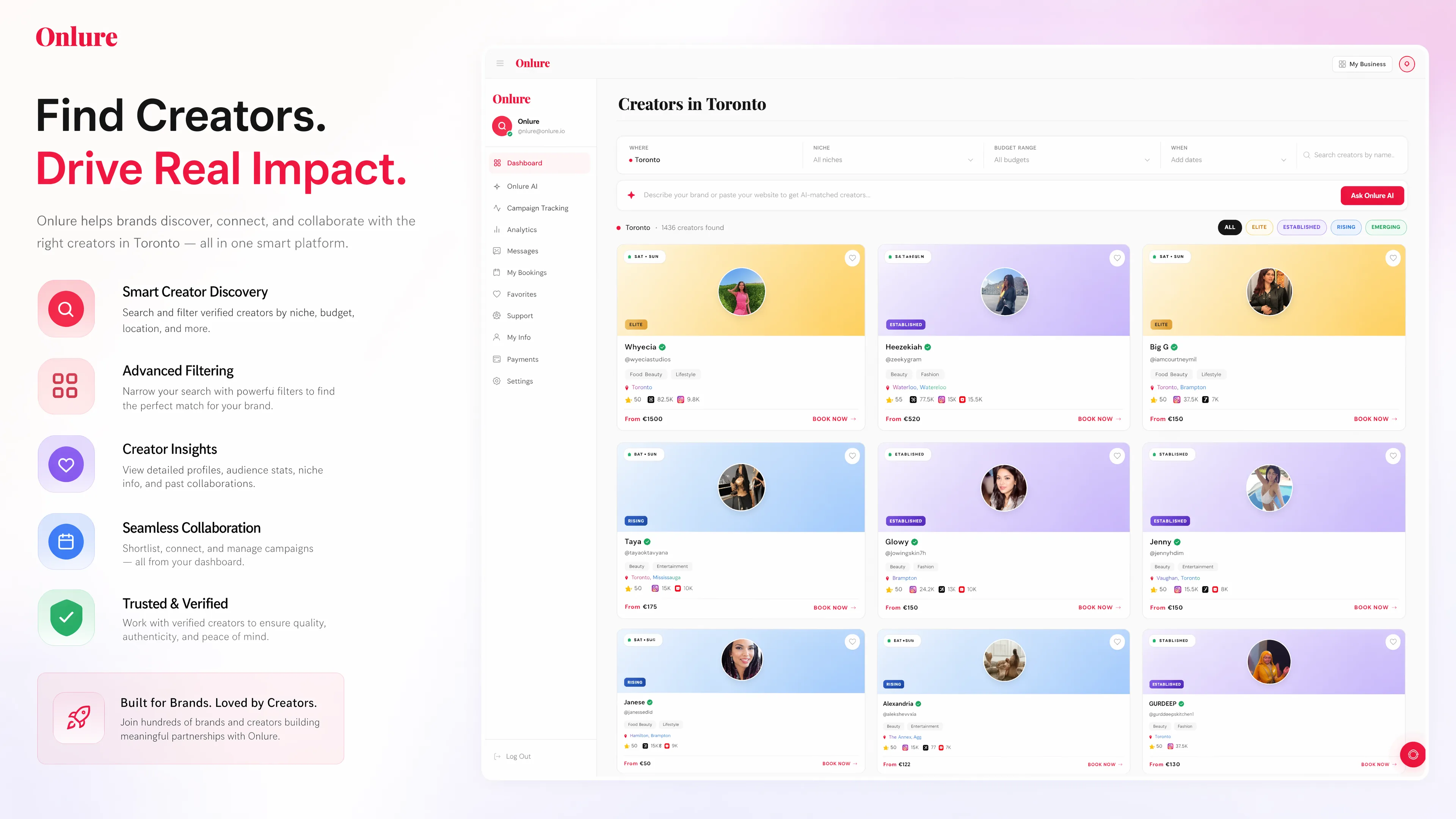
Onlure shows all of these on every creator profile. When a brand books, they're looking at the metrics that predict outcomes, not just a follower count.
4. Why do agencies still price on follower count?
Two reasons. First, follower count is the one metric you can pull from public data at scale. An agency rep can grab 200 creators' follower counts off Instagram in an afternoon. Pulling true engagement quality and niche fit takes 10x longer per creator.
Second, follower count justifies higher fees. Book a 200,000-follower creator, charge 30% commission on a $5,000 deal, and you clear $1,500. Book a 3,000-follower creator on a $300 deal and you clear $90. The incentive points straight at bigger creators, fit be damned.
That's the structural reason creator-direct platforms exist. When the marketplace takes no commission, the platform's incentive lines up with brand outcomes instead of deal size.
5. What does "engagement quality" actually mean?
Likes are the weakest signal. They're cheap, easily inflated, and they don't predict action.
Engagement quality is the ratio of saves + shares + comments to total reach. A Reel with 1,000 likes and 500 saves lives in a different universe than one with 1,000 likes and 30 saves. A save means "I want to act on this later." A share means "I want to tell someone." Both predict in-store visits at much higher rates than likes do.
In Onlure data, a 2x save rate beats a 5x follower count for predicting verified visits. A creator with 4,000 followers and a 6% save rate outperforms one with 20,000 followers and a 1% save rate every time.
6. How does Onlure price creators differently?
Three structural choices:
One, we lead with engagement quality and niche fit, not follower count. Profiles surface save rate, niche tags, and past campaign completion rate first. Follower count is there, but de-emphasized.
Two, our matching weighs niche fit, locality, engagement quality, and past performance ahead of raw follower count. Brands get a shortlist of who will actually convert, not just who has the biggest audience.
Three, we take no percentage commission. Since we don't profit from bigger deal sizes, we've got no reason to nudge brands toward bigger creators when smaller ones would convert better.
So smaller, better-fit creators routinely beat larger ones on local campaigns. Brands save money. Creators who deliver get rewarded. Follower-count vanity loses.
Stop pricing on the wrong metric
If you're a brand, browse creators on Onlure ranked by performance, not followers. If you're a creator, build a profile that surfaces what counts: your engagement, your niche, your past wins.