
The creator economy is having a numbers moment. The global figure sits at roughly $250B in 2026, and Goldman Sachs Research projects it could roughly double to $480 billion by 2027 (a projection, not a realized result). The headline number hides where the real opportunity is.
Big number, local reality
Most of that $250B flows through a small set of huge accounts and global platforms. The part nobody has built well is the local layer. Think of the neighborhood creator who can fill a café on a Tuesday, and the small business that would happily pay for it but has no good way to.
In Canada, I stick to the estimate that shows its math. The Canada Media Fund puts the digital creator ecosystem's GDP contribution at roughly C$2.6–4.3 billion, with an estimated 12,000 to 20,000 full-time-equivalent creators. (That widely-shared "$14B Canadian creator economy" figure traces back to AI-generated aggregator sites, so I leave it out.)
Why local wins
Three things line up:
- Spend is moving down-market. Nano and micro creators will take 45.5% of influencer spend in 2026 (eMarketer).
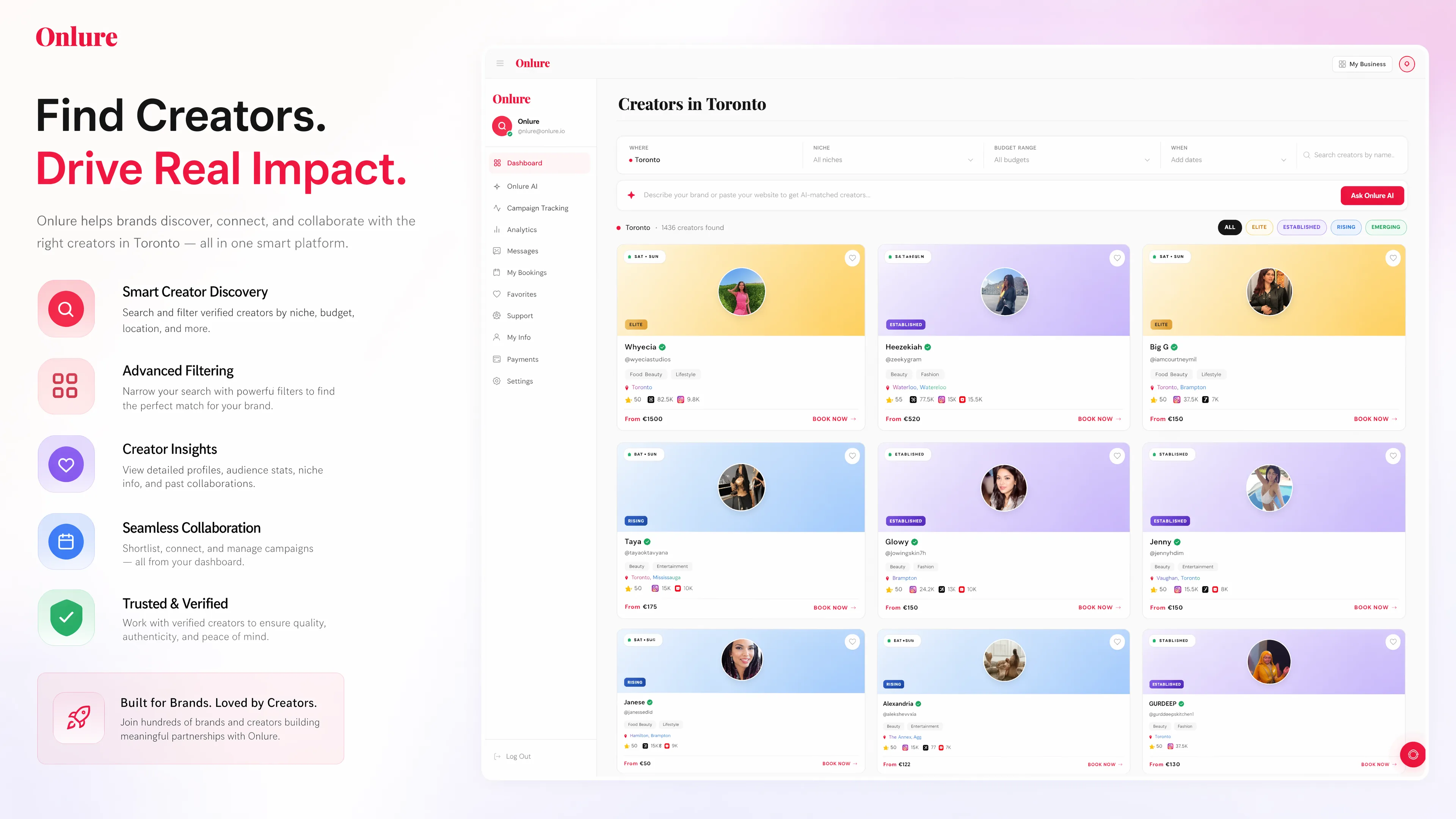
- Toronto is the #1 city for influencer talent in Canada (Collabstr 2026), ahead of Vancouver and Montreal.
- Local results are measurable in a way global brand campaigns aren't. A visit is a visit.
“The next phase of the creator economy isn't bigger. It's closer.”
The takeaway
The $250B headline is real. It's just not where most local businesses or creators actually live. The opportunity worth building for is the neighborhood loop, and that's exactly where Onlure starts.