
You can predict most creator-brand mismatches from the booking decision itself. A creator whose audience doesn't fit, whose style clashes, or whose posting cadence is off will underperform no matter how good your brief is. The 7-question pairing test runs in 5 minutes before you book, and it heads off 80% of campaign failures. Here's the test, the math behind it, and how to apply it.
Campaigns rarely flop because of a bad brief or a small budget. They flop because of bad pairings. Put a great creator in front of the wrong brand and you get mediocre content. Send a sharp brief to the wrong creator and everyone wastes a week.
So here's the test. Seven questions, five minutes, run it before every booking.
Question 1: Does the creator's audience overlap with the brand's customers?
This is the question that matters most, and it's the one people skip.
Pull the creator's audience demographics (city, age, gender skew, primary interests) and line them up against who actually shops at the brand.
A 22-year-old beauty creator with 8K TikTok followers asked to promote a 65+ retirement community is not going to drive visits. The audiences don't touch.
That same beauty creator promoting a downtown Toronto cafe her followers already frequent? Now you've got a fit.
How to check audience demographics:
- Ask the creator for insights screenshots (city distribution, age range)
- Onlure profiles surface this automatically
- Read the creator's recent comments and DMs to confirm the audience you inferred is real
Score: pass / fail. A fail means don't book, full stop, no matter how the other questions land.
Question 2: Does the creator's content style fit the brand?
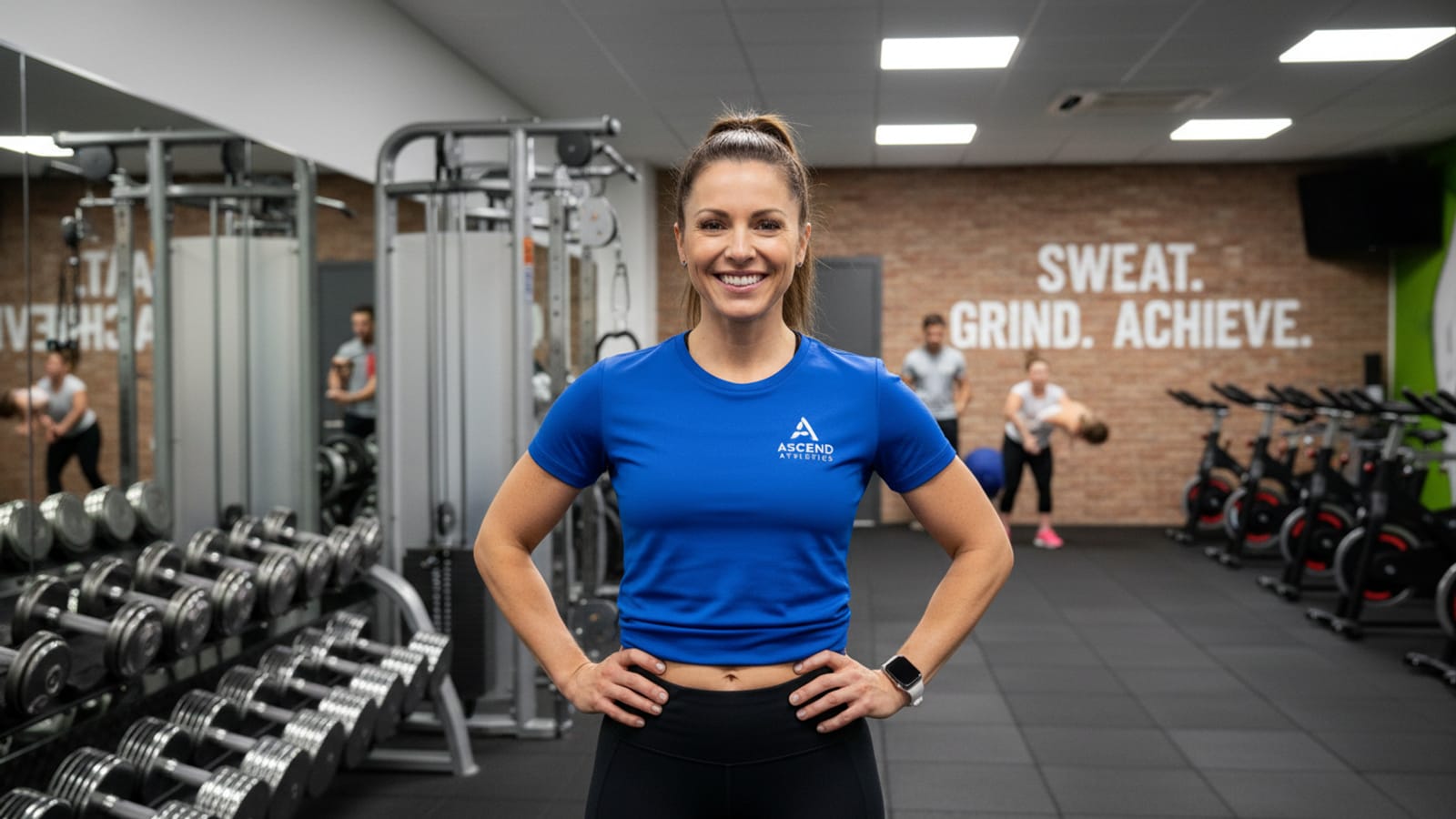
This is about visual and tonal fit. A creator who makes chaotic comedy content doesn't belong in a quiet yoga studio. Someone known for soft, warm, intimate cafe shots is the wrong call for a high-energy gym.
Look at the creator's last 9 posts. Picture the brand's name and offering dropped into that style. Does it hold up?
If your honest answer is "I'd have to ask them to change how they shoot," you're looking at the wrong creator. Their style is the reason their audience showed up. Jam a brand into a style that doesn't fit and the content comes out stiff.
Score: strong fit / okay fit / wrong fit. Don't book a "wrong fit," even with perfect audience overlap.
Question 3: Does the creator's posting cadence support your timing?
A creator who posts twice a week can't carry a "post within 48 hours" campaign. A creator who posts daily can fold in one campaign without it sticking out as obviously paid.
Scroll the recent grid. Are they posting 3+ times a week? Daily?
For time-sensitive pushes (event launches, weekend windows), book the frequent posters. For evergreen content, cadence matters a lot less.
Score: matches campaign timing / doesn't match.
Question 4: Does the creator's location match the brand's geography?
For local businesses, this one isn't negotiable.
Find out where the creator lives and posts from, and whether their audience is concentrated in the brand's area.
A Toronto cafe wants creators whose followers are 60%+ in the GTA. A creator with 50K followers scattered across Canada and the US will send fewer people through that cafe's door than a creator with 4K followers packed into the Junction.
For online or shipping brands, geography fades into the background. For physical visits, it's the whole game.
Score: hyper-local match / regional match / national or wrong region.
Question 5: Has the creator delivered for similar brands lately?
Track record is the best predictor you have of future performance.
Scroll the creator's last 90 days. How many posts were brand collabs? Were they brands like yours? Did the posts look like they worked (strong engagement, the brand tagging back in the comments, a follow-up booking)?
A creator who's worked with 5 restaurants in the last 90 days, all with content that looks good, is a safe bet. A creator who's never posted a brand collab is a gamble. They might be excellent. They might also freeze up once there's paid scope on camera.
Score: extensive track record / some track record / no track record.
Question 6: Will the creator engage with the brand on the day?
People overlook this, and it shows up in the content. The creator who shows up, films, leaves, and posts (with zero interaction in between) hands you a weaker result than the one who chats with the staff, asks questions, and actually warms to what you're selling.
In the booking conversation, does the creator ask thoughtful questions about the brand? Do they light up at the specifics, or treat the whole thing as a transaction?
Score: engaged / lukewarm / transactional. Lukewarm is fine for a one-off. It's a real problem for an ambassador-style commitment.
Question 7: Does the creator's price match the campaign value?
This one is arithmetic. A $1,500 booking for a brand with a $50 average customer doesn't pencil out unless you pull 40+ visits and convert 20% to repeat. A $300 booking for that same brand at 10 visits gives you clean ROI.
Given the brand's average customer value and the visit count a creator at this tier can realistically drive, does the booking pay back inside 60 to 90 days?
If the answer is "no" on a single campaign, fine. Early campaigns are tests. If the answer is still "no" on your month-3 campaigns, you're booking the wrong tier.
Score: clear ROI / unclear ROI / unlikely ROI.
How to use the test
Score all 7 questions for each creator you're considering:
- 7/7 strong: book immediately
- 5-6/7 strong: book with a refined brief that addresses the weak spots
- 3-4/7 strong: probably skip; if you book, treat it as a test
- Under 3/7 strong: don't book
Look back at most failed campaigns and they score under 4/7. The ones that worked score 6/7 or 7/7.
Five minutes per creator. Set that against a $500 booking that lands flat, and the time barely registers.
How Onlure structures pairing
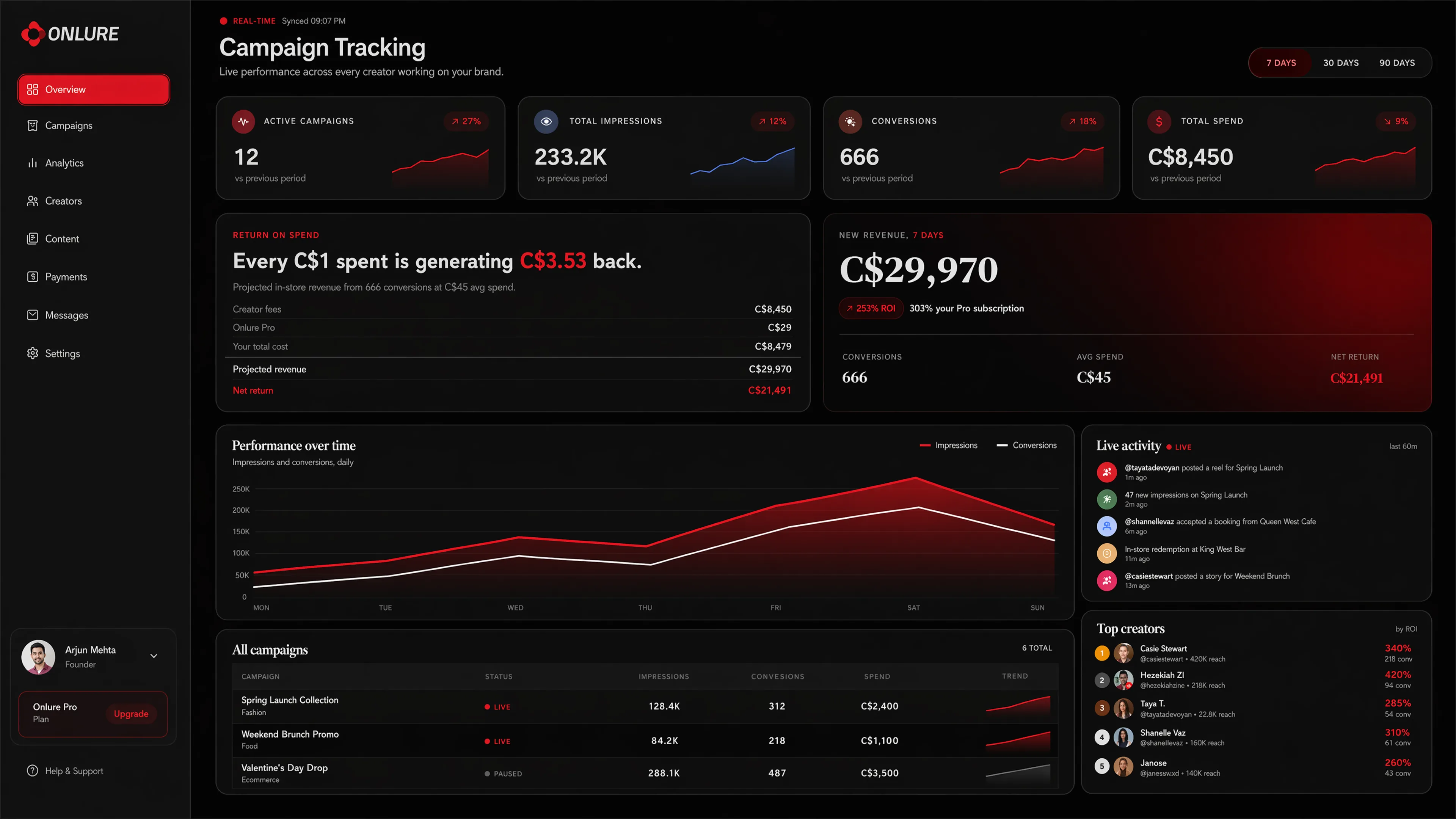
Onlure surfaces creators by niche, neighborhood, audience demographics, and engagement quality, the exact inputs the 7-question test runs on. Describe your business and you get a curated shortlist that already clears the geography, audience, and style filters.
Pairing a creator to a brand now takes seconds, not the weeks it used to eat up scrolling profiles and pitching over DM.
Run the test on your next booking
Booking through Onlure or on your own, run the 7 questions before you commit. Campaigns that pass the test return 3x to 6x the ROI of the ones that don't.