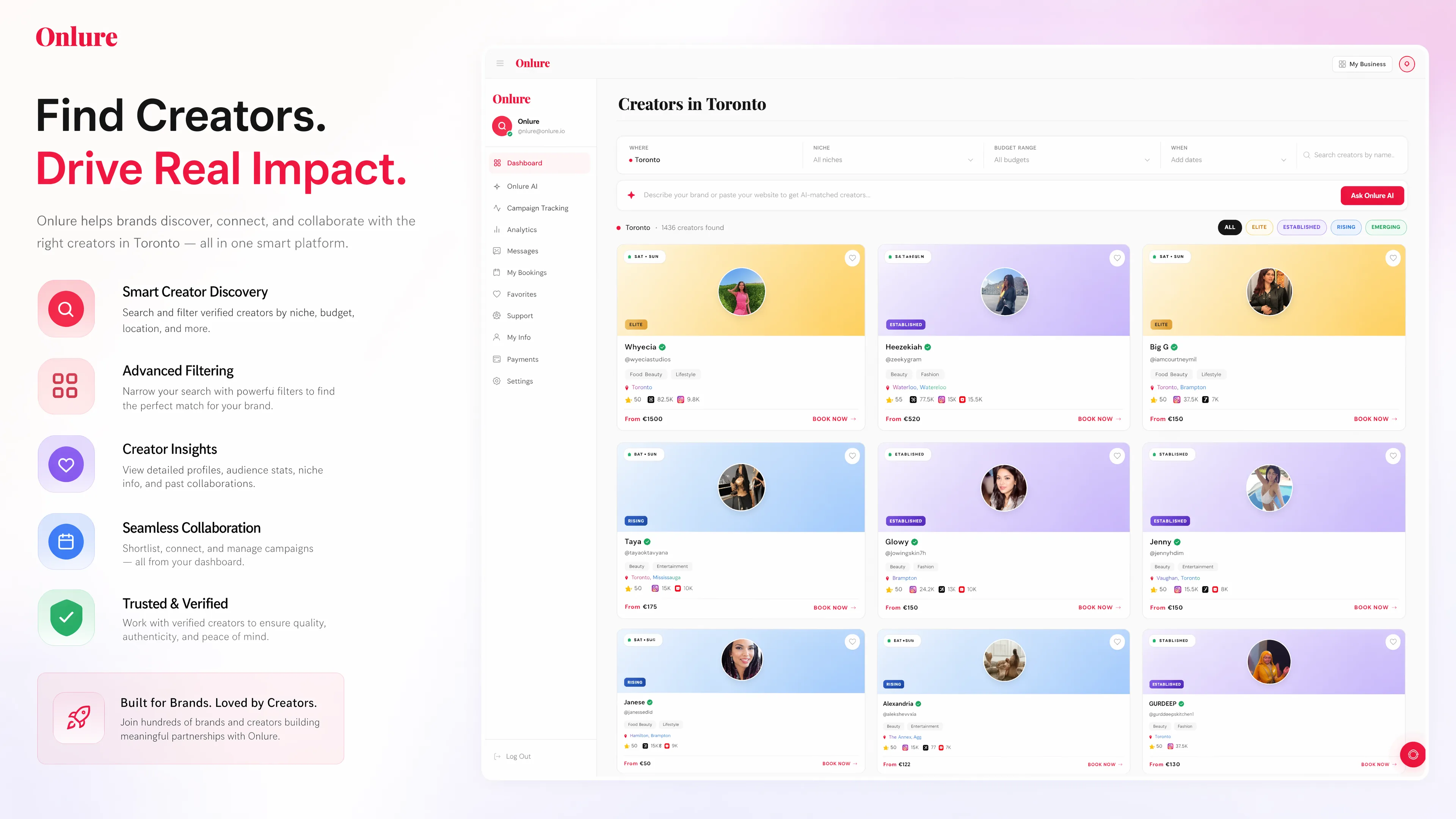

For years, finding a creator meant hashtag spelunking and spreadsheet triage. In 2026, you just describe what you need ("home chefs under 100K followers in the east end") and let semantic search do the rest.
AI discovery is now the norm, not the edge
Per the Influencer Marketing Hub Benchmark Report, influencer discovery is AI's single most common application in influencer marketing, with 55.8% of marketers using AI specifically for this purpose.
The shift is from keyword matching to meaning matching. You stop guessing which hashtags a creator uses. The search reads what their content is actually about and who actually engages with it.
Why this matters for local brands
Local discovery is the hardest case for the old tools. A great neighborhood creator might never use the "right" keywords, yet be perfect for a café two blocks away. Semantic matching surfaces fit by niche, neighborhood, and engagement quality, the inputs that actually predict whether a campaign drives visits.
On Onlure, a business describes itself in a sentence and gets back a ranked shortlist of local creators. No more scrolling endless profiles.
A note on AI disclosure
As AI tools spread through the workflow, disclosure rules have caught up. Ad Standards Canada's October 2025 guidelines, alongside Meta, TikTok, and Google platform rules, now require labels for AI-generated content and virtual influencers (#AIcreated, #MadeWithAI, #AIinfluencer). Using AI to *find* creators is fine. Passing AI-generated *content* off as human is not.
The takeaway
Discovery isn't the bottleneck anymore. The brands that move fastest in 2026 describe their ideal partner in plain language and let the matching engine handle the search.