
There are seven ways a business can connect a marketing touch to a visit at its location. They do not measure the same thing. Some count redemptions, some count answers, some estimate a population, and only a few produce a visit you could pay for. Here is each one on what it counts, who it suits, where it fails, and whether cost per visit can be calculated from it.
In short
- The best method is the one the customer finds easiest, because the one that gets used is the one that counts.
- Platform estimates (Google's modelled store visits) suit chains; Meta no longer offers a store traffic objective.
- Pay-per-visit models exist for observed visits (GroundTruth, since 2018) and for card-linked purchases (Fidel), each with its own enrolment rules.
- Judge every method on three conditions: counted at the place, inside a window, tied to a source.
1. A code at the counter
What it counts: redemptions. The customer shows or says a code they got from the post, the flyer or the ad.
Best for: any business with a register and a staff member who will enter the code. Costs nothing.
Where it fails: codes leak (one friend's code becomes everyone's), staff forget to enter them on a busy Saturday, and customers who were persuaded but forgot the code go uncounted. A single code shared across creators also loses the source.
Can you price a visit on it? Yes, if each source has its own code and the register records it.
2. A question at the counter
What it counts: answers to "how did you hear about us?"
Best for: checking the other methods. If codes say Instagram and the answers say word of mouth, one of them is wrong.
Where it fails: memory. People name the channel they saw last, not the one that convinced them, and staff stop asking by Thursday. Google itself uses surveys only to validate its model, polling a panel of over 10 million Opinion Rewards volunteers, not as the count.
Can you price a visit on it? No. Treat it as a check.
3. A platform estimate
What it counts: a modelled projection. Google Ads store visits come from signed-in users with location history, "extrapolated to represent the broader population", for accounts that pass privacy thresholds on ad volume and foot traffic, outside sensitive categories.
Best for: multi-location brands comparing campaigns.
Where it fails: a single location rarely qualifies (Google says it is "unable to provide guidance that guarantees an account to be eligible"); the estimate can be viewed by campaign, ad group, ad and keyword inside Google Ads, per Google's reporting page, but it covers only Google's own ads, never a creator or a flyer; and Meta no longer offers the objective at all. The Google explainer and the Meta explainer go into each.
Can you price a visit on it? No. It is an estimate, which is why Google reports it rather than charges for it.
4. Geofenced ads with observed visits
What it counts: phones that saw the ad and were later observed inside a boundary drawn around the store. GroundTruth launched a cost-per-visit model on March 13, 2018, in which advertisers "pay only for ads that result in a store visit", and said it was tracking over 2 billion visits a month.
Best for: chains and franchises with ad budgets large enough to buy on a network.
Where it fails: it depends on phones that share their location with the network's apps, a permission granted app by app, and on the cross-app identifier that links the ad view to the visit, which about 35% of iOS users shown the prompt grant; location sharing is a separate permission, granted app by app, and no published benchmark says how many phones grant both to any one network. It also needs minimum spends that a single shop rarely meets. The visit is observed, but the source is the ad network's campaign, not a particular creator or flyer.
Can you price a visit on it? Yes; that is the model's point.
5. Card linking
What it counts: purchases made with a card the customer enrolled. Fidel's FAQ describes a consent checkbox the cardholder must tick, support for Visa, Mastercard and American Express, and a list of ineligible cards, including corporate, purchasing and some prepaid cards.
Best for: repeat-purchase programs and cashback offers where the customer has a reason to enrol.
Where it fails: it counts a transaction, not a visit, so a browse without a purchase is invisible; it needs enrolment first; and cards paid through a wallet only count if the physical card number was enrolled.
Can you price a visit on it? Yes, for enrolled customers, as a purchase rather than a visit.
6. A link to a page
What it counts: clicks, and online orders if the page sells. Affiliate programs such as Shopify Collabs pay creators a commission on tracked online sales, with a 2.9% processing fee on each automatic commission payment.
Best for: online stores, and for local businesses as a measure of interest.
Where it fails: a click is not a visit. A person who tapped the link and walked in two days later is uncounted; a person who clicked from another city is counted.
Can you price a visit on it? No. Price an online order on it.
7. Loyalty and membership check-ins
What it counts: visits by customers who already joined.
Best for: measuring repeat behaviour and rewarding regulars.
Where it fails: the person a creator brought in for the first time is, by definition, not a member yet. It measures retention, not discovery.
Can you price a visit on it? For members, yes.
How do you choose?
Ask three questions of any method. Was the visit counted at the place? Was it counted inside a window after the touch? Does it name the source? A code per creator at the counter passes all three and costs nothing. A platform estimate fails the first and third. A link fails the first. A survey fails the third. The plain-language guide covers the terms, and the cost per visit explainer turns a passing count into a price.
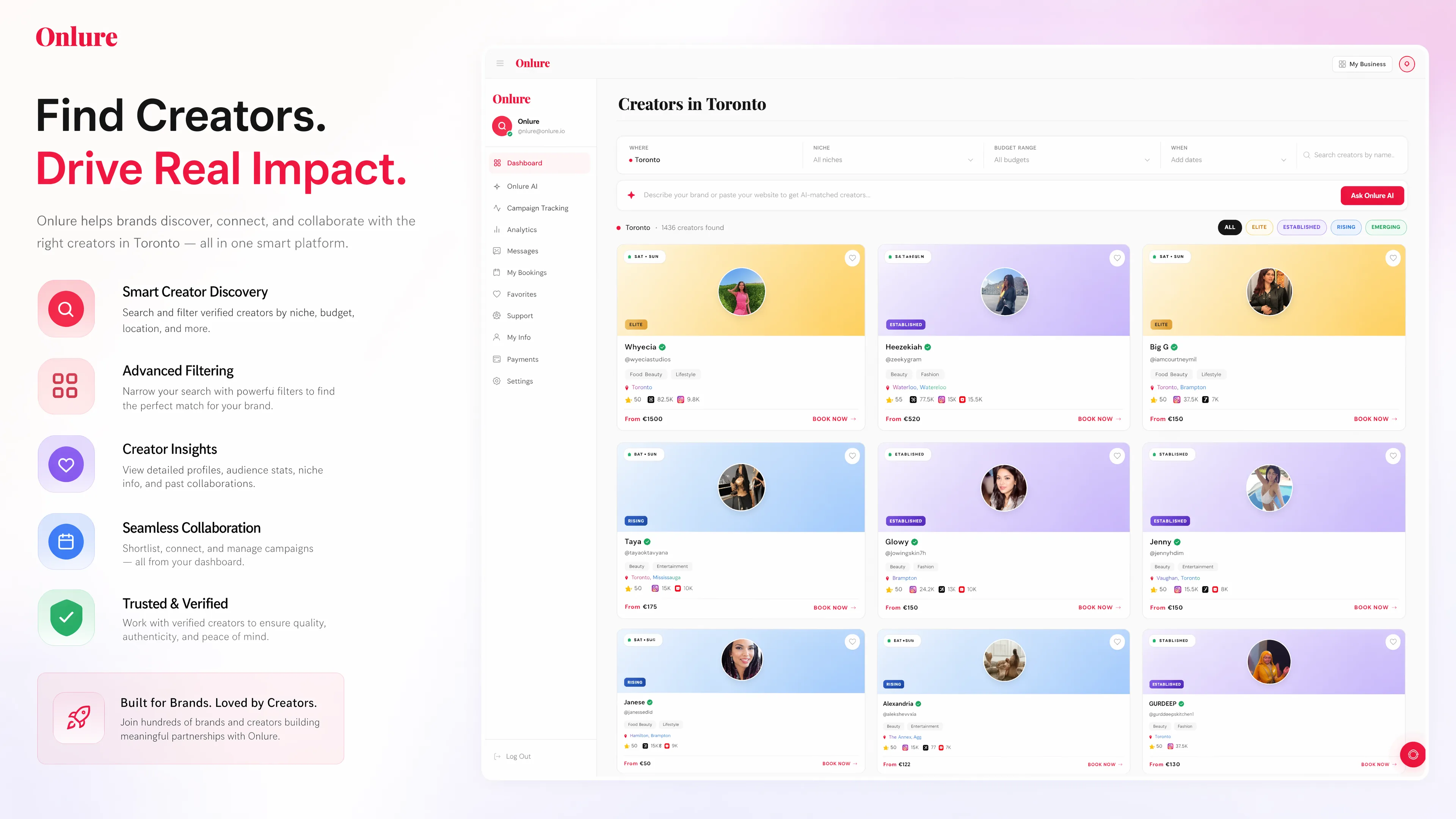
On Onlure, local businesses book local creators for a campaign and see the walk-ins each creator sends, counted per creator. The brands page explains how a campaign is set up.
Frequently asked questions
What is the cheapest way to measure store visits?
A code per source, shown at the counter. It costs nothing, names the source, and is counted at the place. Its weaknesses are leaked codes and forgetful staff, which a weekly check against "how did you hear about us?" answers catches.
Are Google's store visit numbers reliable for a single store?
They are designed for accounts with enough ad volume and foot traffic to pass privacy thresholds, and Google cannot guarantee any account qualifies. For one location the number is often absent, and when present it is a modelled estimate of Google's own ads, reportable by campaign, ad group, ad and keyword, that cannot see a creator or a flyer.
Can you measure store visits without tracking customers' phones?
Yes. Codes at the counter, card-linked offers the customer enrols in, and visits counted on site all work without location tracking. Only platform estimates and geofenced ad networks depend on phone signals.