
On August 1, 2023, Meta started removing news from Facebook and Instagram for everyone in Canada. It was the company's answer to the Online News Act, which requires large platforms to compensate news publishers, and more than three years later the block is still in place.
If you run a café, a salon or a shop, you probably didn't notice the day it happened. You've felt it since, though, because the neighbourhood paper that used to share your opening on Facebook can't reach a single Canadian there anymore.
What the block took from local news
A year in, the Media Ecosystem Observatory measured the damage. The McGill and University of Toronto project found Canadian news outlets had lost 85% of their engagement on Facebook and Instagram, about 11 million views a day. Local outlets went quiet in large numbers; 212 of the 713 that had been active on social media, roughly 30%, had stopped posting on every platform.
Smaller places took the worst of it. The Observatory's Summer 2026 brief found that engagement with news organizations fell 89% in rural areas and mid-sized cities in the six months after the ban, against 48% in large cities.
Most people still haven't noticed. Asked whether Canadian outlets can publish news on Meta's apps, only 26% of Instagram users and 41% of Facebook users correctly said no.
Who people hear from now
Canadians didn't log off. In the Digital News Report Canada 2026 from Université Laval, 53% had used social media for news in the week before the survey, up from 44% a year earlier. That made social media the most-used news source in the country for the first time, even with most news content blocked on Facebook and Instagram.
Much of that news now comes from individual people. The same survey of 2,059 Canadians found 38% got news from creators or influencers in the past week, rising to 57% of 18 to 24 year olds and 55% of 25 to 34 year olds. On Instagram the shift is starker still; across 135 major news events from 2023 to 2025, influencers took 84% of the engagement, according to the Observatory.
City guides held on as well. Narcity isn't a Qualified Canadian Journalism Organization and Meta doesn't classify its posts as news, so it kept publishing on Instagram, where it now gets the largest share of the news engagement that's left.
Creators didn't simply replace the local paper: the Observatory found in 2024 that Canadians weren't going looking for news elsewhere, and 30% of Canadians in the Laval survey rate creators less trustworthy than news brands, against 15% who rate them more trustworthy. The attention still moved, though. When Canadians hear about something on Instagram now, it's far more likely to come from a person than from an outlet.
What it means for a local business
Free coverage got harder to come by. With almost a third of local outlets silent on social media, and the rest unable to put a story in front of people on Facebook or Instagram, a write-up doesn't travel the way it used to. It still helps in search, so take it when you can get it.
Under-35s get their news from people. More than half of Canadians aged 18 to 34 got news from a creator in the past week. A local creator who comes in, posts about the visit and tags your business reaches them in the feed they already check.
Reviews still close the decision. In a Harris Poll for TouchBistro of 1,000 Canadian diners, 88% said they at least occasionally rely on a restaurant's popularity on social media before deciding to go, and 35% had used Google Reviews in the past three months to choose where to eat. Creators get you found; your Google Business Profile and reviews get you picked, so keep both in shape.
Don't plan around the block lasting. In January 2026 Ottawa said it was open to a deal that would bring news back to Facebook and Instagram, and U.S. trade officials have called the Online News Act a trade irritant. News could return to the feed. A creator's audience belongs to the creator either way, which is why creator marketing holds up whatever Ottawa and Meta decide.
Pay for the people who walk in
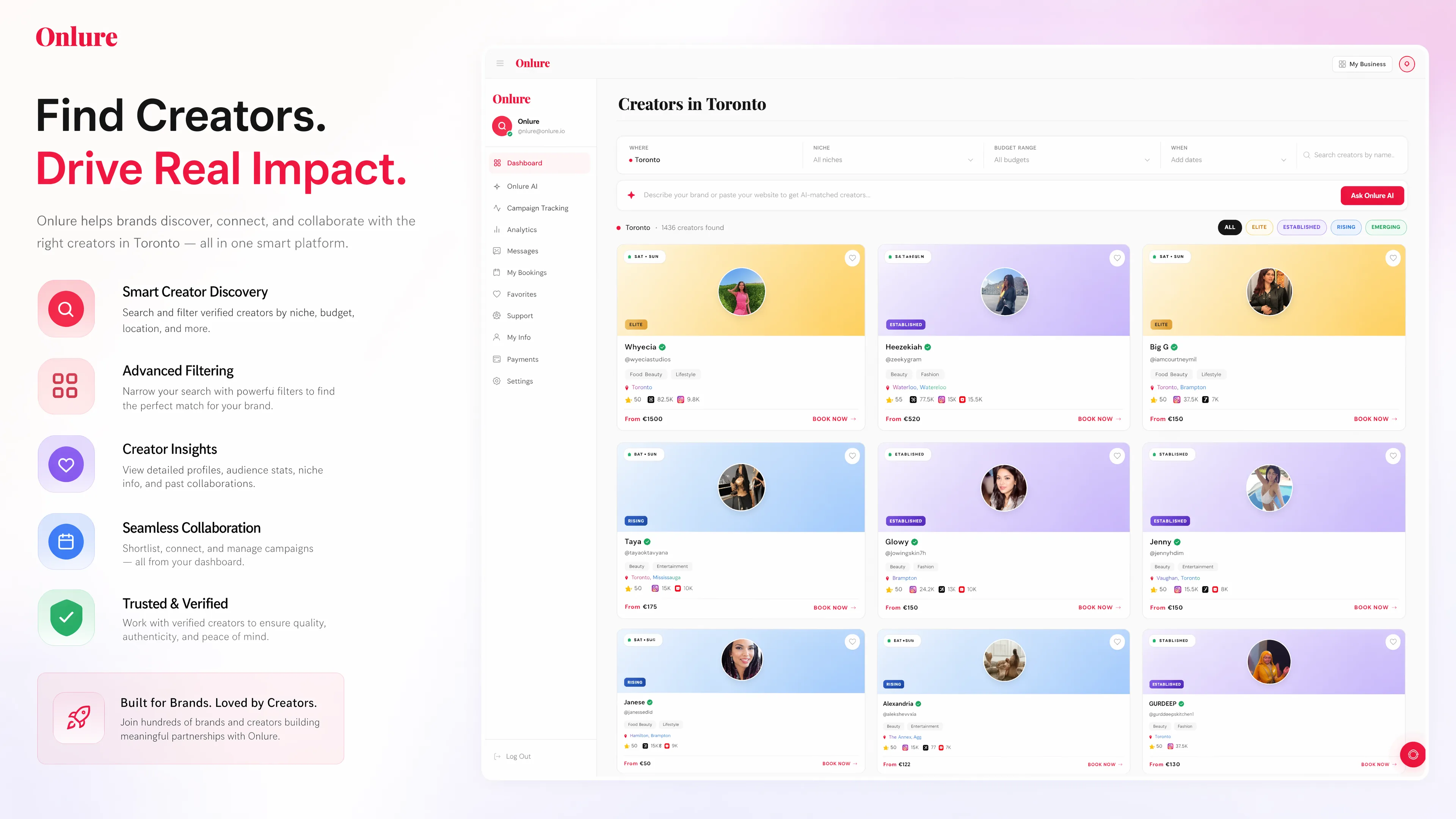
The risk with any channel that replaces free coverage is paying for views and never knowing who came through the door. On Onlure, local businesses book local creators for a campaign and see the walk-ins each creator sends; World Soccer Party booked seven creators and counted 173.